
Nuclear power is expected to create a competitive advantage for shipping lines and charterers through its superior efficiency and economics. China is researching and developing a 14,000 teus container ship powered by nuclear power. Unlike traditional nuclear reactors, the new reactor uses thorium, a safer and more abundant nuclear fuel. This type of reactor does not require water for cooling, is compact, quiet and more reliable than conventional designs. If successfully deployed on a large scale, this technology could revolutionize commercial cargo transportation.
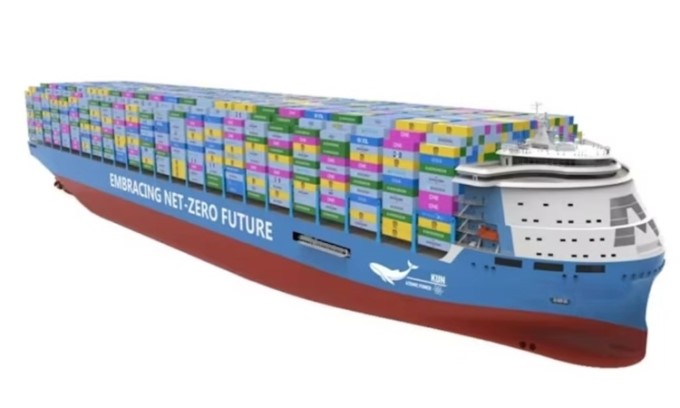
Under this design, the 200 MW of heat from the reactor is not used directly to power the ship, but is used to power a supercritical carbon dioxide (sCO²) generator via the Brayton cycle. The highly efficient thermodynamic process converts heat into enough electricity to propel the large ship across the oceans for years without refueling. The ship is equipped with a 10 MW standby diesel generator.
In Europe, a recent report by Lloyd's Register and LucidCatalyst for Seaspan Corporation Pte. Ltd. examined the technical, economic and regulatory potential of integrating small modular reactors (SMRs) into the container fleet, and provided a comprehensive cost-benefit analysis for Seaspan's business model. Nuclear power is expected to significantly reduce operating costs, amounting to $50 million per year in fuel costs and about $18 million in carbon penalties.
According to the report, nuclear-powered container ships could eliminate fuel costs, reduce greenhouse gas (GHG) emissions, and reduce transit times. It is calculated that a 15,000 TEU nuclear-powered container ship traveling at 25 knots (about 391 TP3T faster than a conventional ship) could increase shipping capacity by up to 381 TP3T/year compared to a conventionally powered ship due to a combination of increased cruising speed and an additional 51 TP3T of capacity due to the elimination of fuel tanks and machinery.
The study found that, if approved by nuclear regulators, nuclear-powered engines could be commercially available within four years. If shipping lines ordered over 1,000 reactors over the next 10-15 years, it is estimated that the reactors could be built for $750-$1,000 per kilowatt, significantly cheaper than conventional nuclear plants, and maintained during routine drydockings. Each reactor is designed to operate for about five years between refuelings, minimizing downtime.
According to Meg Dowling, a senior engineer at Lloyd's Register, the energy transition and the inherent challenges of the shipping sector are calling for new solutions. Nuclear power is not only a carbon-neutral solution, but also a game-changing economic opportunity for shipowners and charterers. Peter Jackson, chief technology officer at Seaspan Corporation, said that small-scale reactors (SMRs) are a very worthwhile technology, with many expected benefits for shipowners and operators. There are of course many challenges to overcome, but I believe that advances in research will soon enable nuclear-powered container ships to operate safely, economically and with zero emissions.